

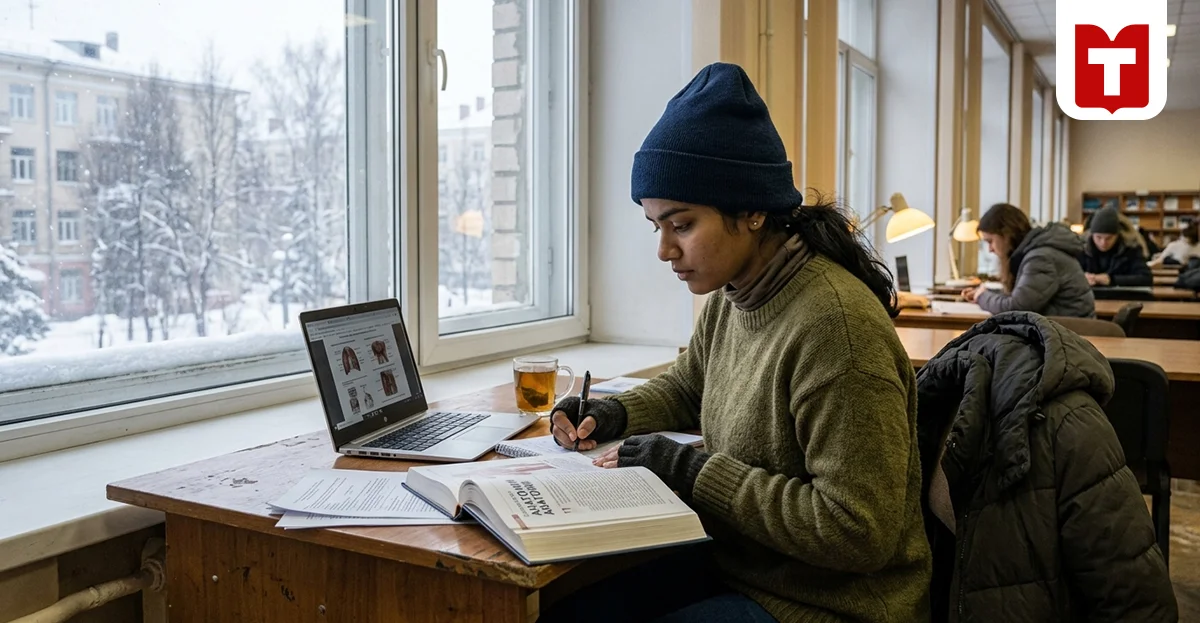
Winter may be challenging for Indian students starting an MBBS in Russia. The low temperatures, snowfall, slippery roads, and decreased sunlight hours will change the way students move around, attend classes, and utilize leisure time. Despite these changes, medical students need to attend lectures and other activities and study regularly on their own.
Adapting to the local climate and having a constant schedule may simplify this process. Students should know the local climate of the city where they study, be prepared for it, and allow enough time to travel in difficult conditions.
As the climate in Russia varies according to the region, winter differs from one city to another in the country. The weather forecast for the city where your university is situated should be checked by Indian students rather than depending on the Russian weather forecast.
Before going to the university, the temperature, wind, and rain should be checked that day. Snow and ice may also affect movement. Local Russian weather for Indian students will help you determine what to wear.
It is important to have the proper clothing when enjoying yourself outside in the winter season. According to Russian emergency services, it is advised that warm, loose, and layered clothing be worn in winter.
In cases where an individual pursues an MBBS in Russia, they will have to move from the hostel to the university, to the hospital, or to any other place for their studies. A winter wardrobe can contain the following:
Thermal layers inside
Winter jacket or coat
Sweaters or fleece layers
Warm socks
Gloves or mittens
A hat that covers the ears
A scarf
Warm insulated and waterproof winter boots
Generally, layering clothing is much better than having one very thick piece of clothing. It is important to keep your feet and shoes dry, avoid tight shoes, and have an additional pair of socks if you know that you will spend many hours outside.
Winter should just alter your schedule and not halt your academic endeavors. The students who are studying MBBS in Russia should plan ahead of time for the travel to attend the lecture and practical classes, since the snow- or ice-covered roads might delay you.
It is better to check out the weather conditions before coming out of the hostel. Maintaining your important notes and academic paperwork in digital form can further ease your preparation process. Use the time in-between lectures to revise small things.
Having a cozy atmosphere at the hostel would help student life in Russia comfortably in winter. Always keep your warm clothing ready and dry your wet clothes and shoes before reuse.
Students need to have their meal plans in place, consume enough water, and get sufficient sleep.
Try not to spend too much time studying without a break. The emergency information in Russia states that being exposed to cold for an extended period, wearing wet clothes, and insufficient clothing are causes of hypothermia. An organized study table and keeping daily necessities nearby will minimize going out into the cold air unnecessarily.
Indian students in Russia must be especially cautious while moving around in snow or ice. It is necessary to wear shoes that have a good grip and not rush while moving across slippery terrain.
One needs to leave early if weather conditions can affect the time taken to reach university or hostel. One must keep the mobile fully charged and save contact details of the university, hostel, and any emergency services.
It is also advised by the Russian emergency service to check weather conditions before stepping out.
Students need to identify basic indicators of hypothermia and cold injuries. They may include constant shivering, numbness, lack of coordination, or drowsiness.
If a person shows symptoms of severe cold exposure, he or she needs to be moved to a warm environment, stripped of wet clothes, wrapped in warm and dry material, and medical help needs to be sought.
In case of suspected frostbite, do not massage the affected part and do not use intense heat directly on it.
Frequent periods of cold weather can disrupt regular activities. However, students who study MBBS in Russia can ensure regularity of studies by establishing weekly goals and a definite revision timetable.
Learning in the company of other students may prove helpful when learning tough topics and preparing for practicals. The time spent indoors can also be utilized in revising and completing the assigned tasks before the next class.
Connecting with their loved ones would help students keep up with their regular support systems. It is not about avoiding winter; it is about making a routine compatible with the winter season.
For all the students who are studying MBBS in India and plan to go to Russia, follow this winter guide to keep yourself warm and comfortable in your daily classes and hostels.
Before winter:
Thermal wear
Warm jacket or coat
Gloves or mittens
Cap and scarf
Warm socks
Waterproof winter footwear
Personal medicines and essentials
University and emergency contacts
Reliable weather app or forecast
Hostel-to-university travel plan
Daily:
Check the weather
Dress in layers
Keep footwear dry
Carry study essentials
Leave early when conditions are difficult
Eat and hydrate properly
Follow your study schedule
Managing is an essential component of MBBS in Russia and student life. Being aware of the local climate, putting on the right number of layers, being cautious about travel arrangements, and sticking to a regular study schedule will help Indian students cope with cold weather conditions easily.
Tula State University is a place where students from all over the world feel comfortable. Medical education in Russia not only requires an awareness of academic aspects but also of student life. Learn more about Tula State University by visiting its website.
Students should wear layered clothing with thermal wear, a warm coat, gloves, a hat, scarf, and insulated waterproof footwear.
Check the weather before leaving, wear shoes with good grip, allow extra travel time, and avoid rushing on icy surfaces.
Early signs can include intense cold, shivering, and chills. Confusion, poor coordination, drowsiness, or loss of consciousness can indicate more serious hypothermia.
Move to a warm place, remove wet clothing, and keep the affected area protected. Do not rub or massage frostbitten skin or expose it to intense direct heat.